Your first hammam ritual
Is it spelled hamam or hammam?
Both spellings appear in English. Hamam is the Turkish spelling; hammam is also widely used for bath traditions in other regions.
Read the guide ↗Short answers about your first visit, prices, privacy, Istanbul and bath history.
All 100 questions →Your first hammam ritual
Both spellings appear in English. Hamam is the Turkish spelling; hammam is also widely used for bath traditions in other regions.
Read the guide ↗Your first hammam ritual
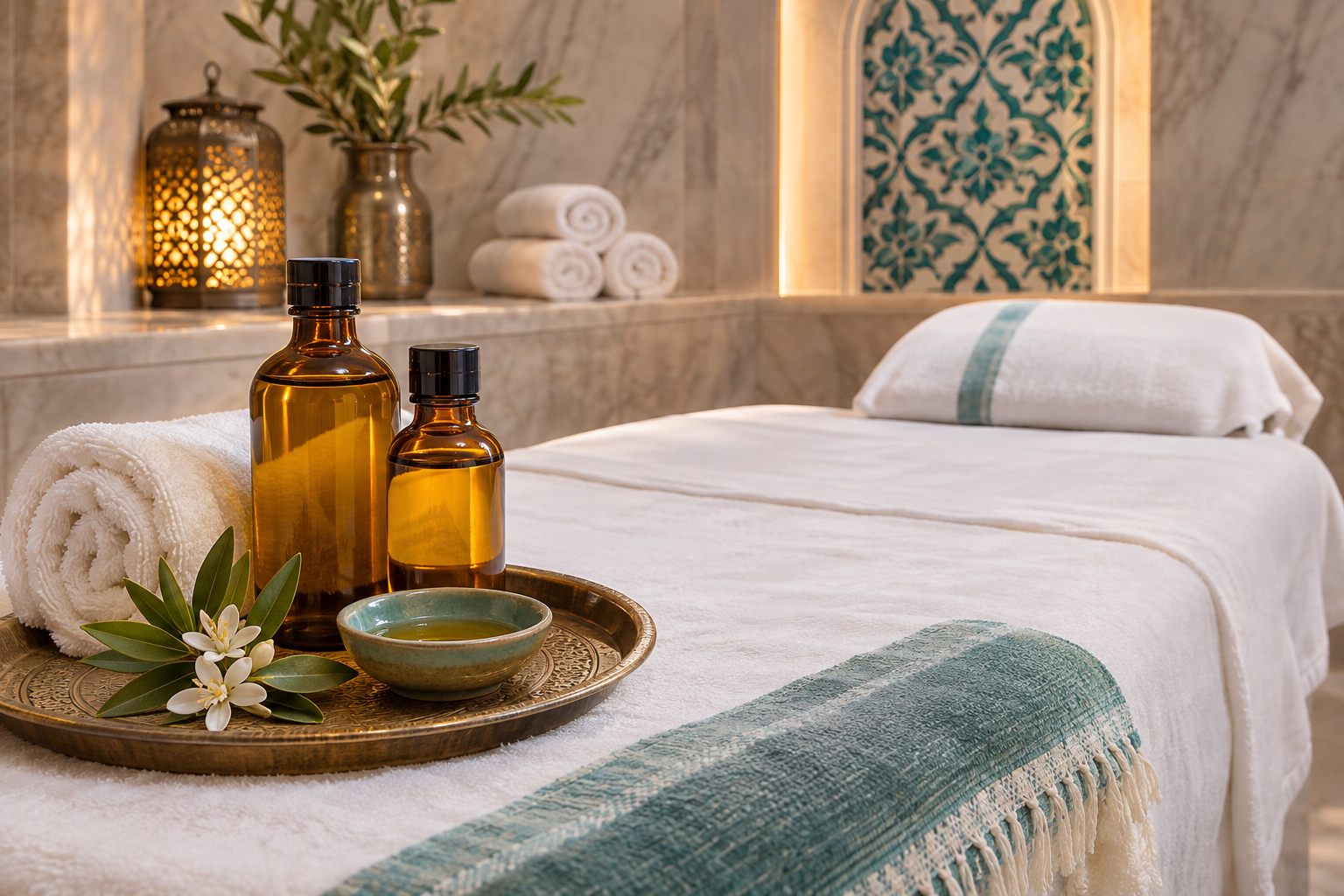
Usually you check in, change, warm up, receive the booked scrub and foam treatment, rinse and rest. Oil massage is a separate stage when included.
Read the guide ↗Your first hammam ritual
The kese scrub exfoliates with a mitt. The foam stage uses soap and washing movements. A menu may include both, but they are not the same treatment.
Read the guide ↗Your first hammam ritual
No. A traditional scrub and foam wash can be booked without an oil massage. Compare the treatment list, not just the word “massage”.
Read the guide ↗Your first hammam ritual
Rinsing is part of the washing sequence. Tell the attendant if soap remains or water feels uncomfortable; do not wait until the treatment ends to speak up.
Read the guide ↗Your first hammam ritual
Allow time to dry, change and sit before leaving. Confirm how the venue handles its rest area rather than scheduling another activity immediately after treatment.
Read the guide ↗Your first hammam ritual
“Daha hafif, lütfen” means “more gently, please”; “Dur, lütfen” means “stop, please”. You can also use simple English and a clear hand signal.
Read the guide ↗Your first hammam ritual
Yes. Ask before the scrub begins and again if the pressure feels too strong. Buying a package does not mean agreeing to uncomfortable pressure.
Read the guide ↗Your first hammam ritual
Yes. Say “stop” clearly and ask the attendant to pause. You do not need to finish a treatment that makes you uncomfortable.
Read the guide ↗Your first hammam ritual
Check each treatment, its duration and the total price. “Foam massage” and “oil massage” describe different services, even when both use the word massage.
Read the guide ↗Etiquette, clothing and privacy
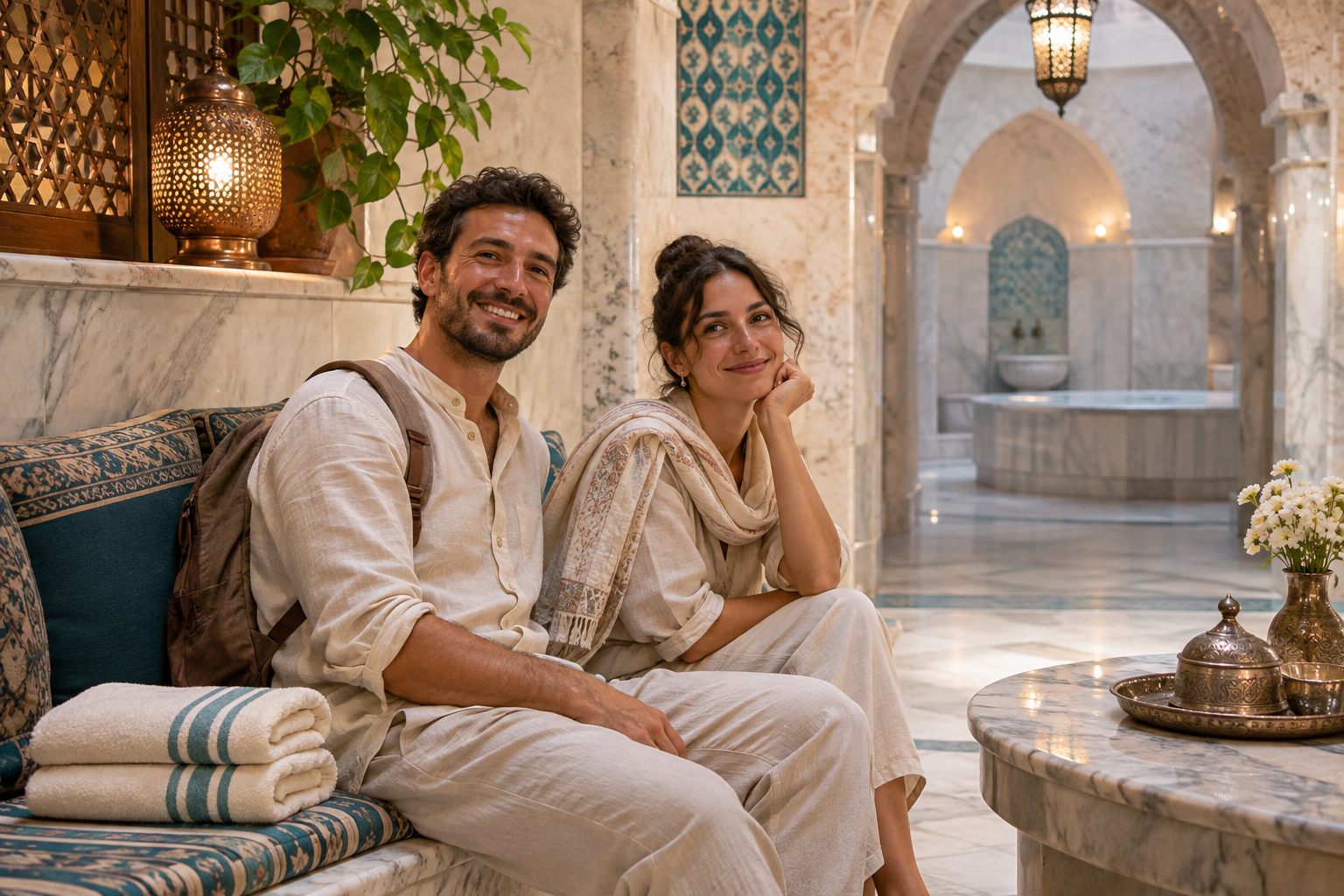
Confirm the venue's swimwear and coverage rules before arrival. Bring swimwear if you prefer it, and ask about private changing and the wrap provided.
Read the guide ↗Etiquette, clothing and privacy
Ask staff first. Never photograph other guests or treatment areas without permission; an attractive room is still a private bathing space.
Read the guide ↗Etiquette, clothing and privacy
It is more practical to leave it securely with your belongings. Water, heat and other guests' privacy make the treatment area a poor place to use a phone.
Read the guide ↗Etiquette, clothing and privacy
Ask the venue about secure storage before arriving. Bring only what you need and keep the key or access method as instructed by staff.
Read the guide ↗Etiquette, clothing and privacy
Request your preference before booking and wait for confirmation. A private room does not automatically guarantee a particular attendant.
Read the guide ↗Etiquette, clothing and privacy
Shared space may include other guests. Private use should specify which room is exclusive, for how long and whether changing or rest areas remain shared.
Read the guide ↗Etiquette, clothing and privacy
No, but keep conversation considerate of other guests. Always speak up about pressure, temperature, privacy or anything affecting your comfort.
Read the guide ↗Etiquette, clothing and privacy
Do not assume a tip is part of the advertised price. Ask whether service is included; any additional tip should be your choice, not a surprise charge.
Read the guide ↗Etiquette, clothing and privacy
Bring products you prefer, but check what is supplied and allowed. Tell staff about products you want to avoid before the treatment starts.
Read the guide ↗Etiquette, clothing and privacy
State your preferred coverage, pressure and any areas you do not want treated before starting. You can change your mind or ask to pause at any time.
Read the guide ↗Prices, packages and booking
Istanbul Bath lists Traditional Hamam at €60, Sultan at €90, Sultan VIP at €120 and Sultan Deluxe at €150. Confirm your selected program and total when arranging the appointment.
Read the guide ↗Prices, packages and booking
Send your reservation request without prepayment or card details. Wait for availability confirmation, then pay at the hamam when you visit.
Read the guide ↗Prices, packages and booking
No. The form sends a request. Your appointment is confirmed after the team agrees availability and details with you through the contact information provided.
Read the guide ↗Prices, packages and booking
Select your preferred date in the form and tell the team your preferred time when contacted. Wait for the agreed slot before making fixed plans around it.
Read the guide ↗Prices, packages and booking
The team uses these contact details to respond and arrange your reservation. Enter both correctly so a mistake in one channel does not prevent contact.
Read the guide ↗Prices, packages and booking
Choose the country code for your number, or enter the full international number beginning with +. Avoid entering the country code twice.
Read the guide ↗Prices, packages and booking
Istanbul Bath displays package prices in euros. Confirm the payment currency, accepted method and final amount before your visit if paying in another currency.
Read the guide ↗Prices, packages and booking
Ask about availability, added time and the exact extra price before agreeing. An optional upgrade should be a clear choice, not an unexpected bill.
Read the guide ↗Prices, packages and booking
Contact the team with your name, original date and preferred new time. A change is only agreed when the team confirms availability and any applicable terms.
Read the guide ↗Prices, packages and booking
Look for recent comments about cleanliness, communication, privacy and the actual treatment. Check that the review describes the same venue and package you are considering.
Read the guide ↗Planning your visit
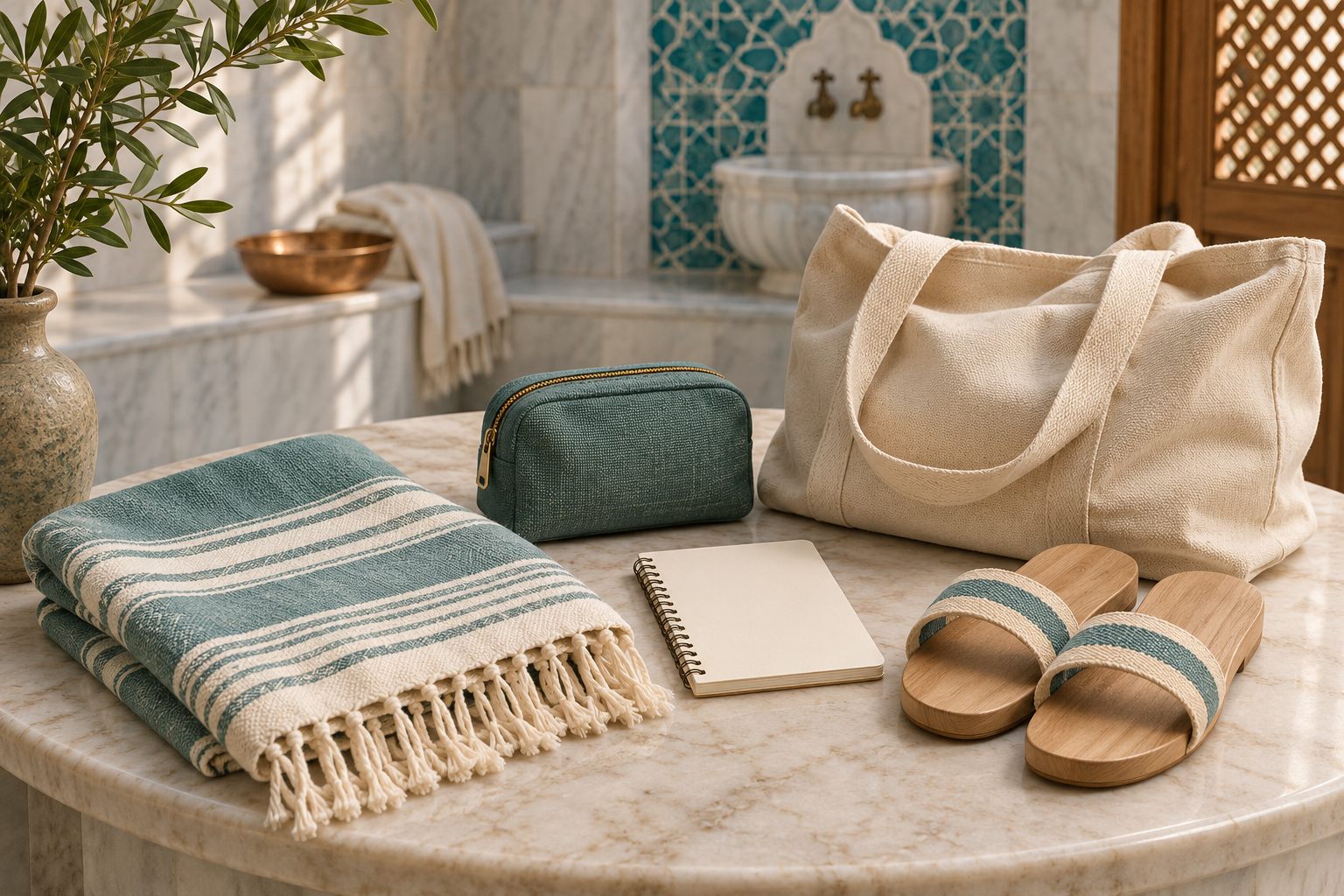
Pack swimwear if required, fresh underwear and personal toiletries. Ask whether towels and non-slip footwear are supplied; leave unnecessary valuables at your hotel.
Read the guide ↗Planning your visit
Add changing, check-in and rest time to the advertised treatment duration. A 60-minute treatment does not mean you will be out of the building in exactly one hour.
Read the guide ↗Planning your visit
It can leave the rest of your day free. Confirm the opening time and appointment first; morning does not automatically mean the venue will be empty.
Read the guide ↗Planning your visit
Yes, subject to the venue's hours and availability. Check the last treatment start time, which may be earlier than closing time.
Read the guide ↗Planning your visit
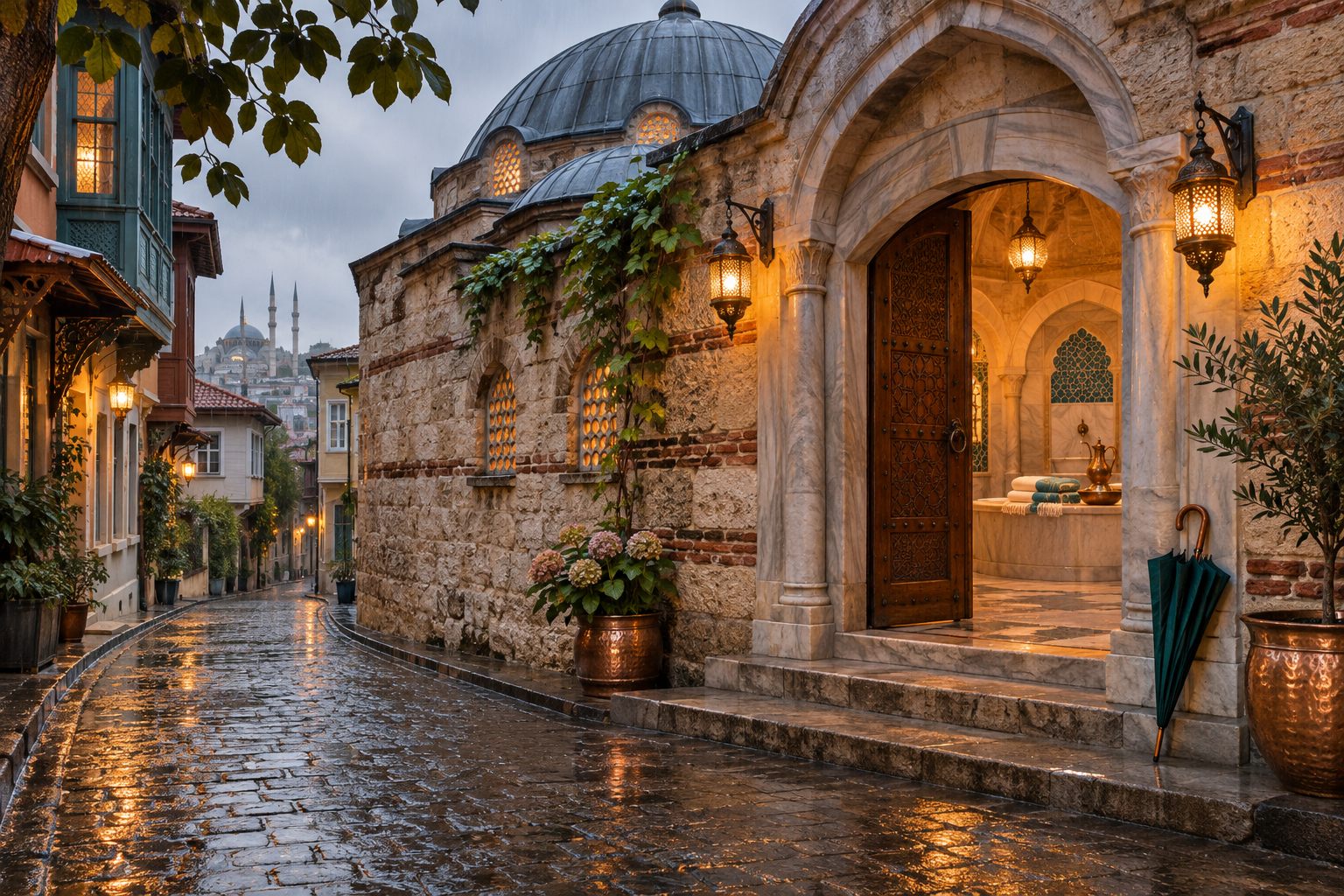
It is an indoor option for a wet day. Reserve a slot and allow time for the journey; rainy weather does not guarantee same-day availability.
Read the guide ↗Planning your visit
Choose a time after you can realistically reach your hotel and settle in. Leave a buffer for flight delays instead of booking immediately after landing.
Read the guide ↗Planning your visit
Only if your schedule leaves enough time to change, collect luggage and reach the airport. Plan from your departure requirements, not just the treatment length.
Read the guide ↗Planning your visit
Ask before arriving. A locker for personal belongings may not fit a suitcase, and luggage storage should not be assumed.
Read the guide ↗Planning your visit
Accessibility varies by building. Ask about entrance steps, lift access, changing rooms, toilets and the route to the treatment area before confirming.
Read the guide ↗Planning your visit
Confirm the exact address, treatments, total price, duration, privacy arrangement and appointment time. Mention any access or attendant requirements before paying or travelling.
Read the guide ↗Couples, families and groups
Some venues offer arrangements for couples, but confirm that you will share the same treatment space and whether it is private. A booking for two alone does not guarantee either.
Read the guide ↗Couples, families and groups
Yes, subject to availability. Book the treatment you want first; request any private room, timing or celebration extras separately and confirm their cost.
Read the guide ↗Couples, families and groups
Keep the appointment clear of flights and tightly timed sightseeing. Confirm a shared room if that matters to you, rather than relying on a “couples” label.
Read the guide ↗Couples, families and groups
Ask whether different treatments can start together and finish at different times. Agree where to meet afterward if one person has a longer massage.
Read the guide ↗Couples, families and groups
Not necessarily. Confirm room and attendant capacity, start times and the final guest count before organising the rest of your day.
Read the guide ↗Couples, families and groups
Ask about group size, exclusive space and what the venue allows. Decorations, photography, refreshments and outside suppliers are not automatically included.
Read the guide ↗Couples, families and groups
Child admission, age limits and supervision rules vary. Ask the venue about your child's age and the proposed services before booking; adult packages are not automatically suitable.
Read the guide ↗Couples, families and groups
Ask about steps, seating, assistance and the treatment schedule. Anyone unsure about heat or a health condition should seek individual medical advice before booking.
Read the guide ↗Couples, families and groups
Yes. A solo reservation is a normal option. Confirm shared versus private space and attendant preferences just as you would for any other booking.
Read the guide ↗Couples, families and groups
Contact the venue before bringing them. An extra guest may change room capacity, start times and the total price, so wait for confirmation.
Read the guide ↗Sultanahmet and Istanbul
Group nearby sights and leave a separate appointment window. For Golden Royal, use the address on Peykhane Sokak rather than a generic “Sultanahmet hamam” map result.
Read the guide ↗Sultanahmet and Istanbul
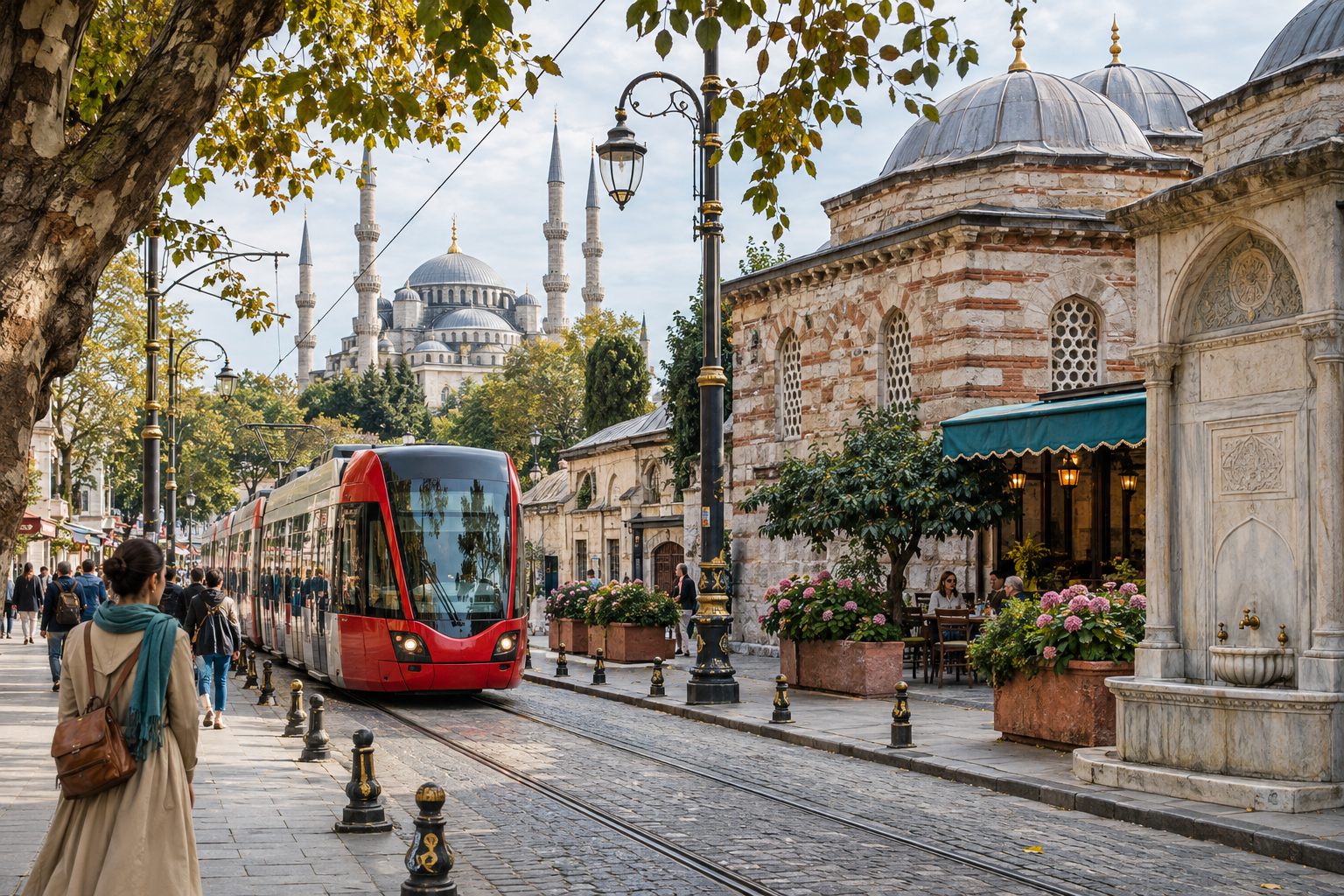
The T1 serves the historic peninsula, including Sultanahmet. Check current service information and walk from the most convenient stop to the exact address in your confirmation.
Read the guide ↗Sultanahmet and Istanbul
Check a live route to the venue's exact address and allow for transfers and the final walk. A taxi's travel time can vary with traffic.
Read the guide ↗Sultanahmet and Istanbul
Yes. Keep your park visit flexible and leave time to walk or travel to the venue. These are separate activities, not an included sightseeing package.
Read the guide ↗Sultanahmet and Istanbul
Beyazıt is home to the Bayezid Hamam Culture Museum. Visit for the building and bathing objects; book your actual bath separately.
Read the guide ↗Sultanahmet and Istanbul
Zeyrek Çinili Hamam offers a specific architectural and museum context. Check its current visitor arrangements; it is a separate venue from Golden Royal.
Read the guide ↗Sultanahmet and Istanbul
Plan the mosque area and your bath as separate stops, allowing for hills and walking. Confirm the exact hamam address to avoid confusing similarly named businesses.
Read the guide ↗Sultanahmet and Istanbul
Compare the T1 and walking routes to your actual venue. Allow for the uphill walk, crowds and the distance from the stop to the door.
Read the guide ↗Sultanahmet and Istanbul
No. Tophane is a different area across the Golden Horn. Check the neighbourhood and address before booking a bath based only on its name or photos.
Read the guide ↗Sultanahmet and Istanbul
Use one day for a museum or historic building and another for a treatment. Keep ticketed visits and bathing reservations separate when planning time and cost.
Read the guide ↗History and traditions
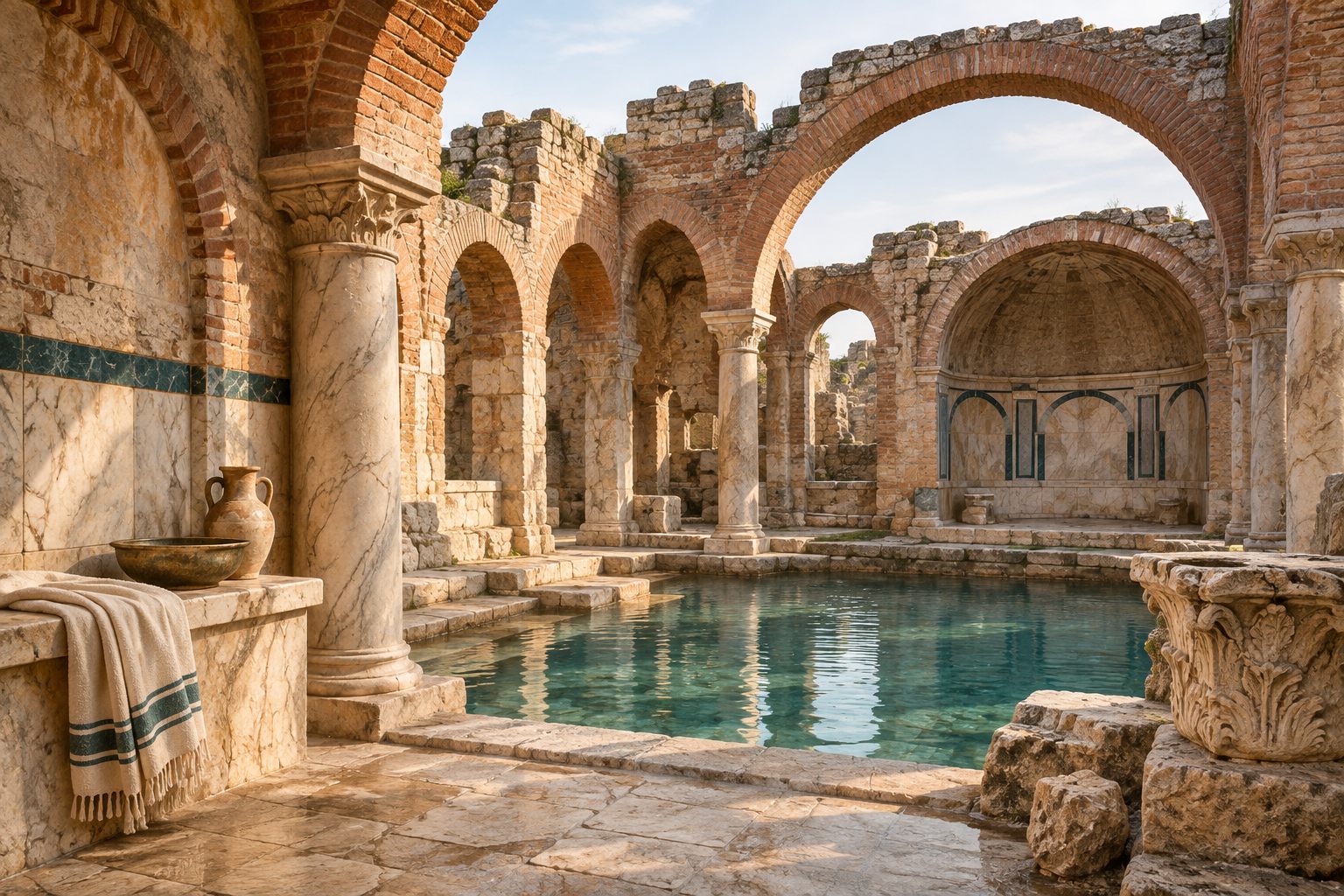
It developed from earlier bathing traditions, including Roman baths, and took its own form in Ottoman society. Today's treatment packages are modern services, not an unchanged ancient ritual.
Read the guide ↗History and traditions
At Zeyrek Çinili Hamam, Byzantine cisterns survive beneath the Ottoman bath. That is this building's story; it does not describe every hamam in Istanbul.
Read the guide ↗History and traditions
Hamams provided a place to wash and meet others. Their social role included conversation and celebrations as well as everyday bathing.
Read the guide ↗History and traditions
A vakıf is a charitable endowment. Some Ottoman baths generated income for foundations supporting institutions such as religious, educational or social facilities.
Read the guide ↗History and traditions
The museum's official account dates construction to 1507–1508 using archival evidence. It is now a place to learn about bath culture, rather than book a wash.
Read the guide ↗History and traditions
Yes. Cağaloğlu is an eighteenth-century Ottoman bath. Its historic identity and today's treatment menu are separate things; check current services directly with that operator.
Read the guide ↗History and traditions
Yes. Sinan's work includes Istanbul bath architecture, including Zeyrek Çinili Hamam. Do not assume every domed hamam was designed by him.
Read the guide ↗History and traditions
A bridal hamam is a pre-wedding bathing celebration. Modern bookings may involve friends or family, but decorations, exclusive space and group services need separate agreement.
Read the guide ↗History and traditions
No. Buildings, customs and services have changed over time. A modern sauna, oil massage or online booking should not be presented as an unchanged Ottoman practice.
Read the guide ↗History and traditions
In some ancient complexes, bathing and physical exercise belonged to the same wider setting. A bath-gymnasium is not simply the ancient name for a modern spa.
Read the guide ↗Architecture and spaces
A double hamam has separate bathing sections traditionally arranged for men and women. Historic layout alone does not establish today's admission or staffing policy.
Read the guide ↗Architecture and spaces
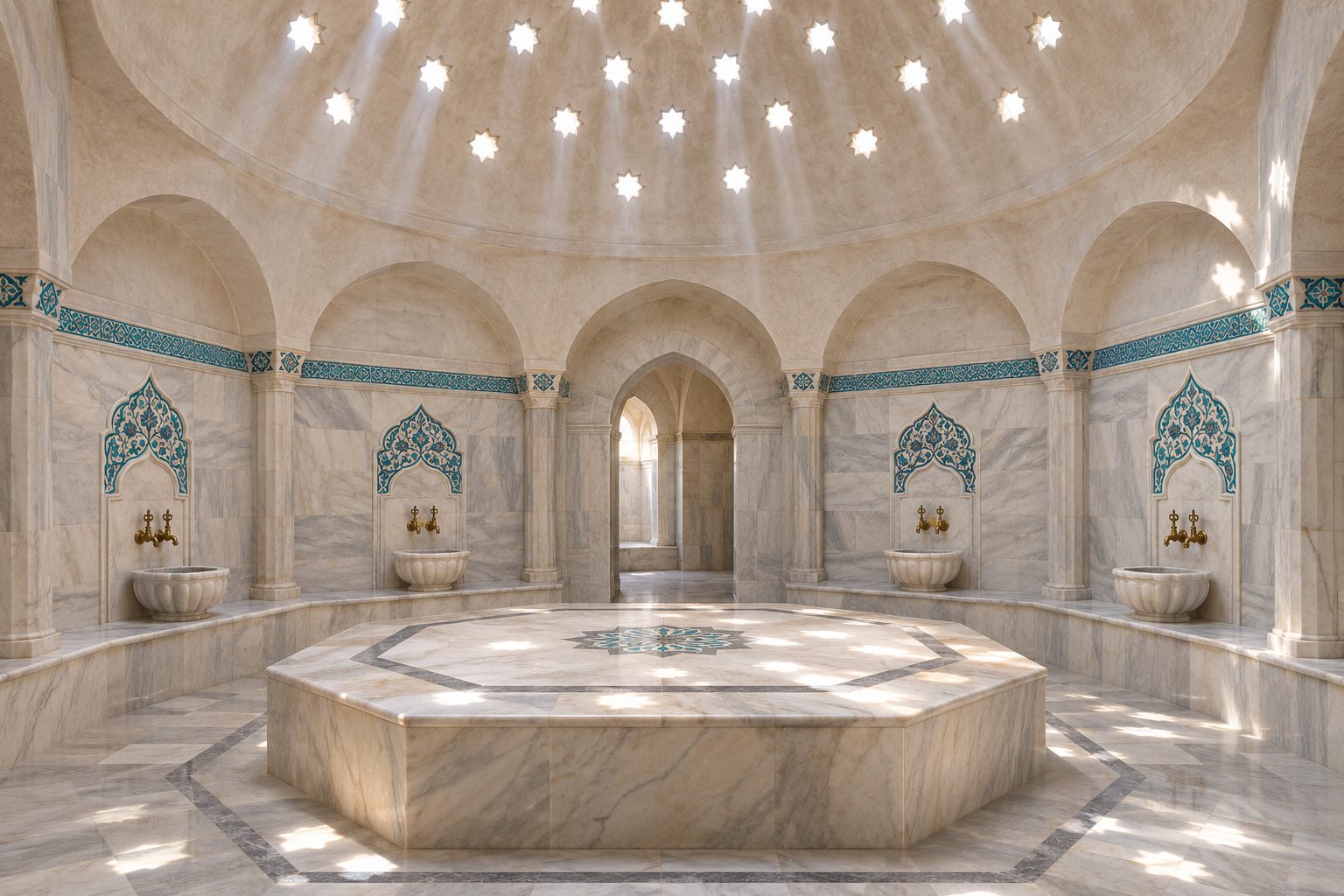
It is called the göbek taşı. It is the central marble platform used within the bathing ritual; the exact treatment sequence depends on your package.
Read the guide ↗Architecture and spaces
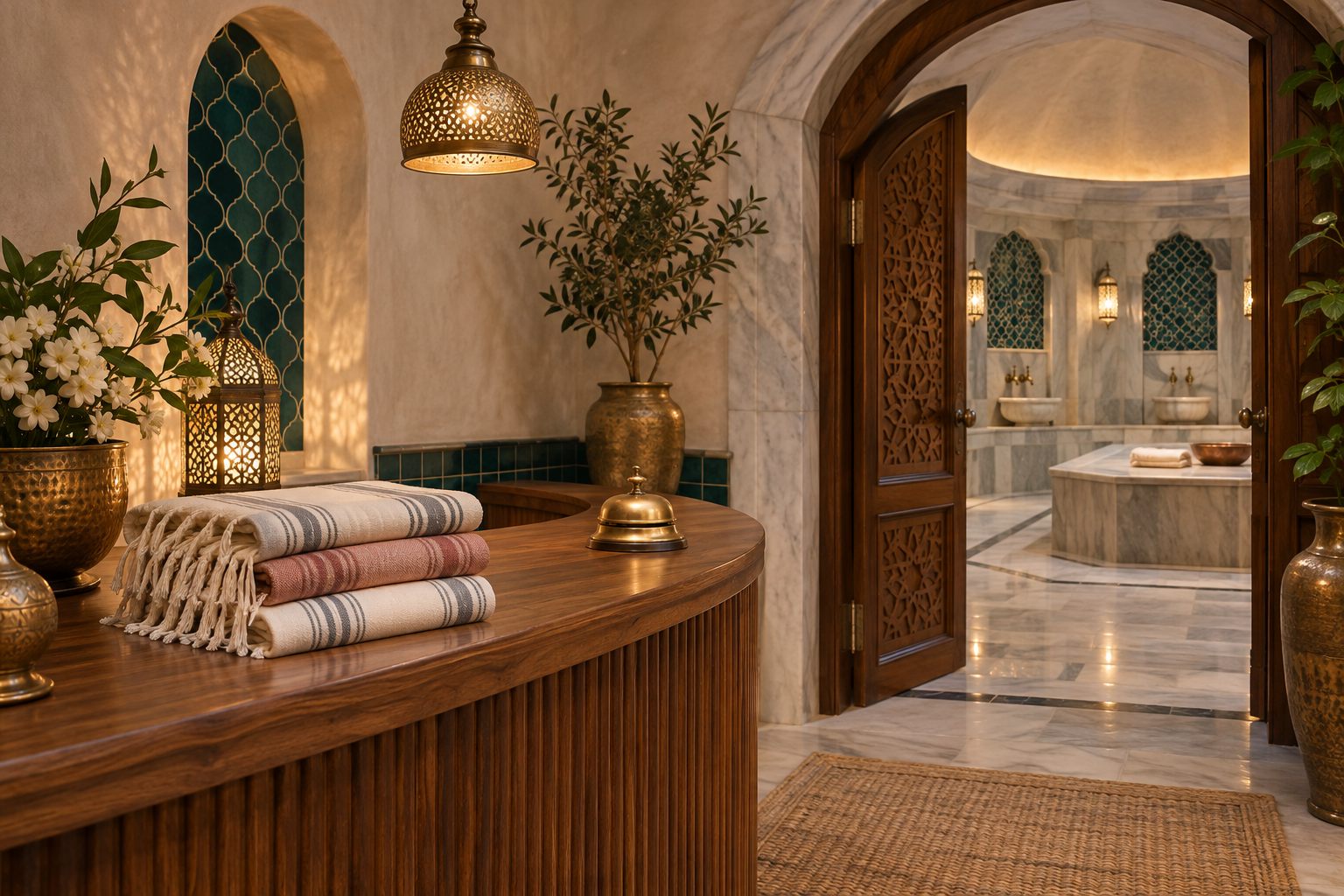
It is generally the changing and reception space. Its function differs from the hot washing room, even when both rooms have impressive domes.
Read the guide ↗Architecture and spaces
Openings in the dome admit daylight into the bath. Their arrangement varies by building, so there is no single pattern shared by every historic hamam.
Read the guide ↗Architecture and spaces
No. An alcove can be part of a shared bathing area. Ask whether your booked room is enclosed and exclusive to your party.
Read the guide ↗Architecture and spaces
Historic baths used furnace-based heating systems to warm water and spaces. The exact system varies, and a working bath may use modern equipment today.
Read the guide ↗Architecture and spaces
No. A cistern stores water; it is not automatically a pool where visitors bathed. Its purpose and date need to be established for that particular site.
Read the guide ↗Architecture and spaces
They may be muqarnas: tiered architectural details used in transitions and decoration. You can notice them without needing to identify every element of the building.
Read the guide ↗Architecture and spaces
Separate entrances can relate to separate bathing sections. Before visiting, use the entrance specified in your confirmation rather than choosing by appearance alone.
Read the guide ↗Architecture and spaces
No. Marble, domes and Ottoman-style decoration can also be modern. Look for documented construction and restoration dates if the age of the building matters to you.
Read the guide ↗Towels, tools and bathing objects
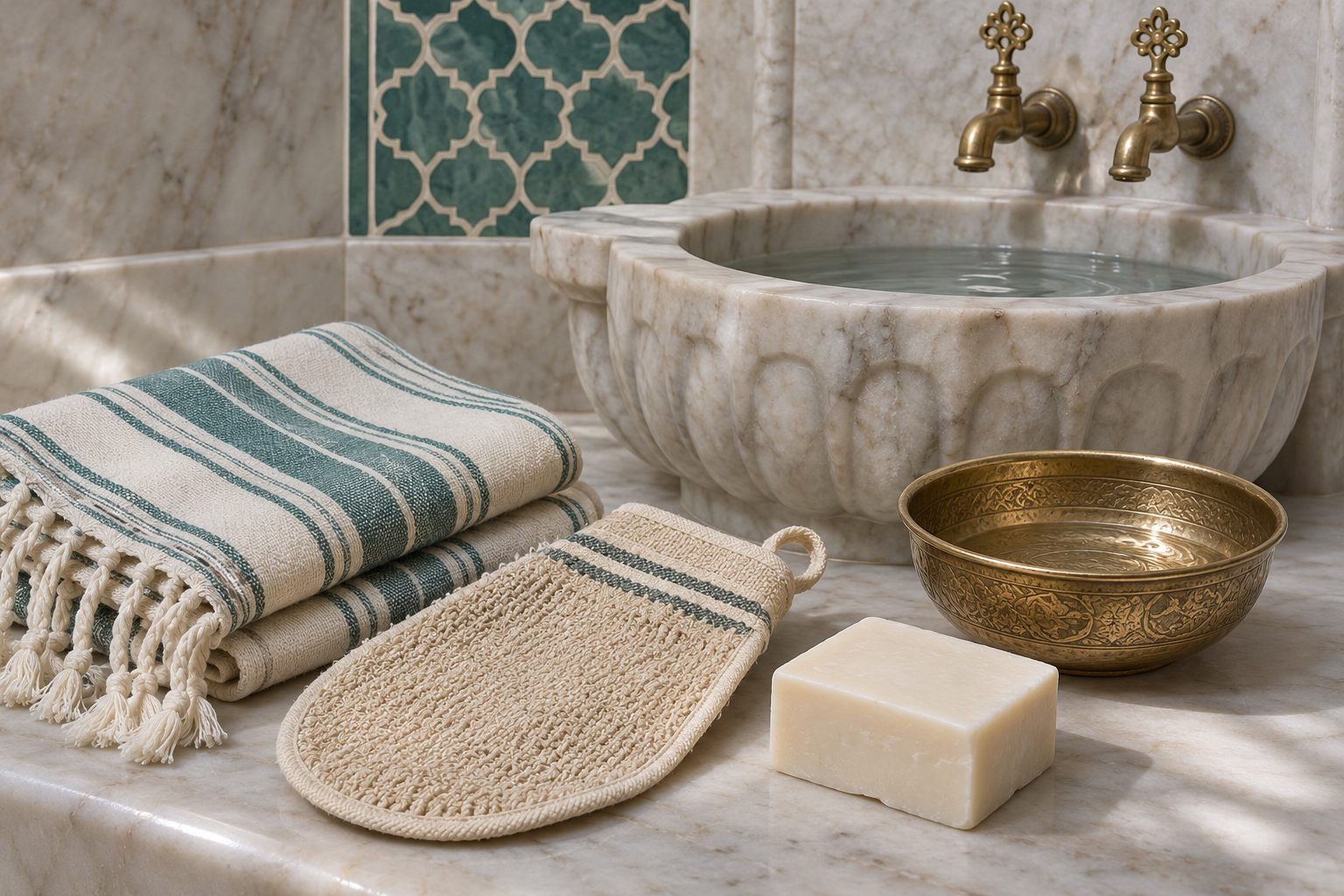
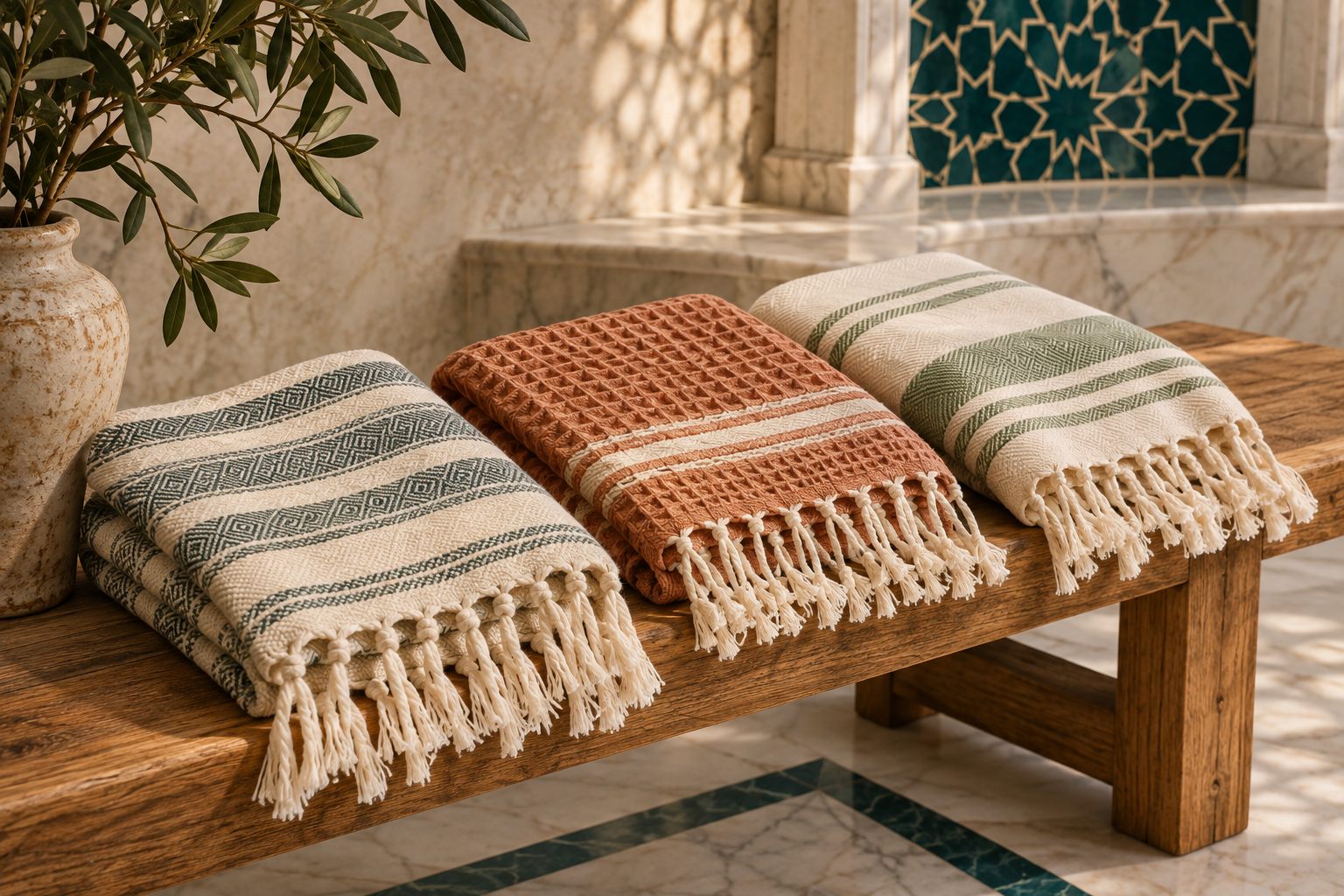
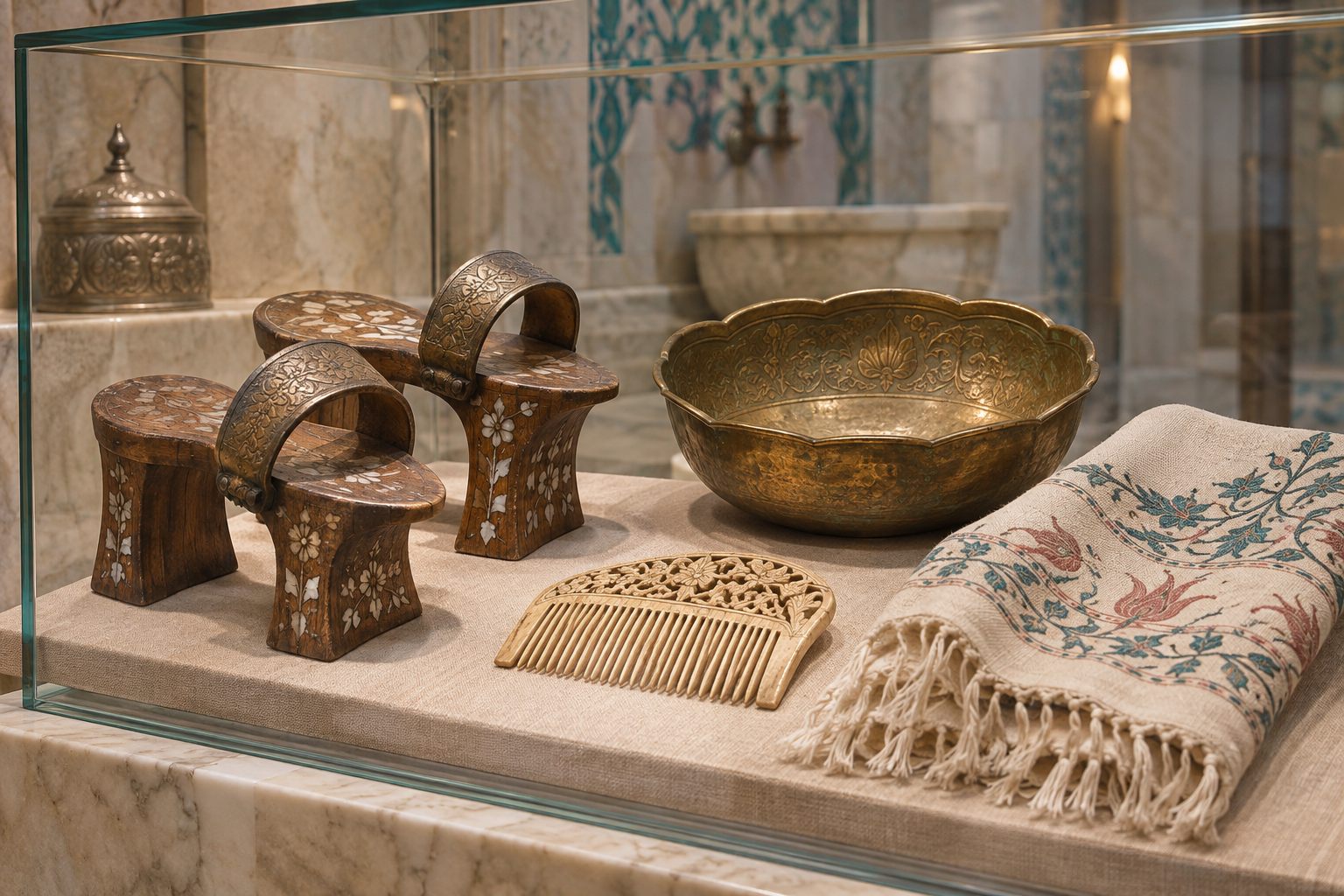
A peştemal is a thin woven bath towel used as a wrap. It is not necessarily a substitute for swimwear under a venue's clothing rules.
Read the guide ↗Towels, tools and bathing objects
A kese is a textured mitt used to exfoliate the skin during the bath. Ask for lighter pressure if needed; discomfort is not something you have to endure.
Read the guide ↗Towels, tools and bathing objects
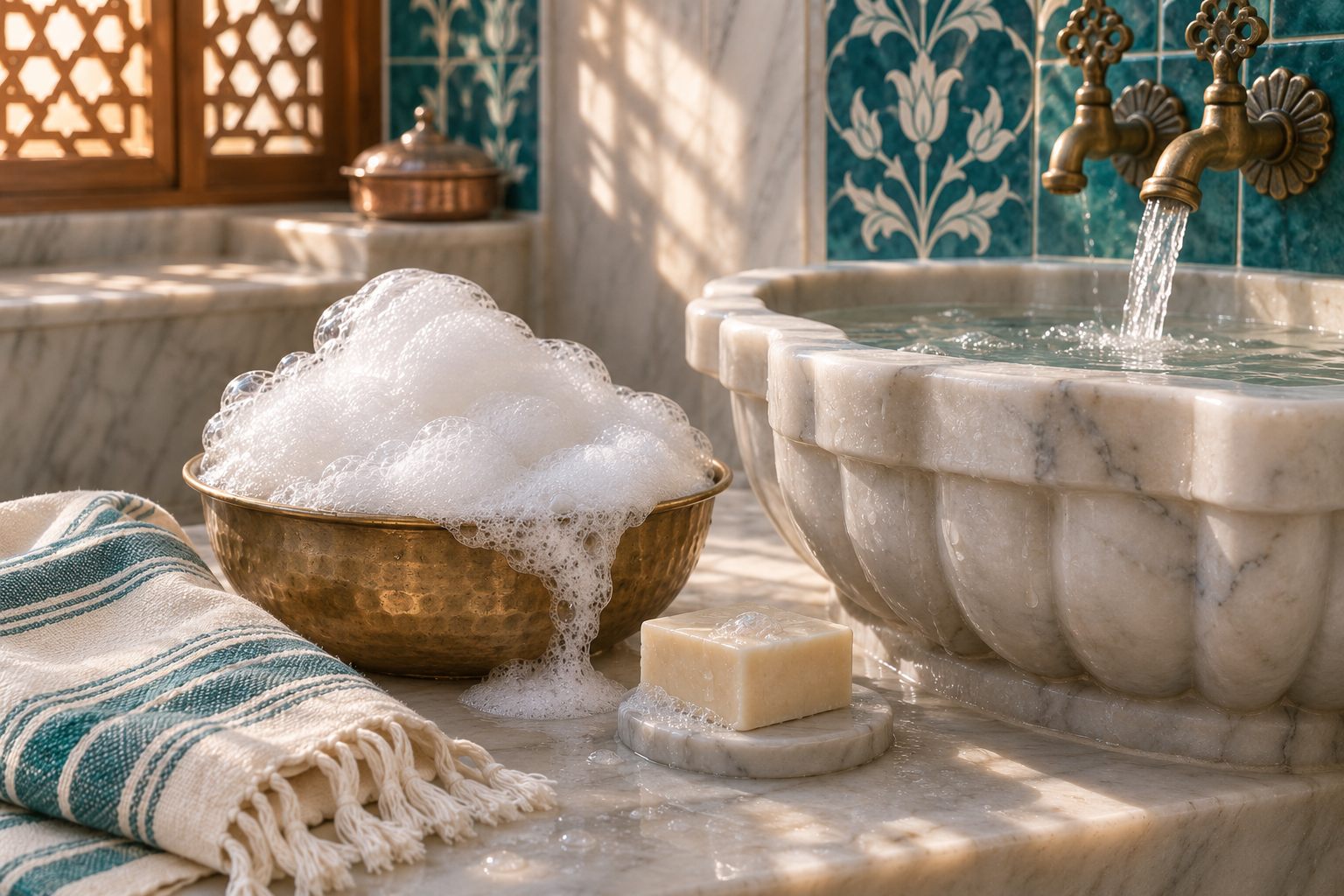
An attendant can use a cloth bag and soap to create a large volume of foam. The foam wash is a different step from the kese scrub.
Read the guide ↗Towels, tools and bathing objects
A bath bowl is used to scoop and pour water for rinsing. Museum examples also show the materials and decorative styles used in everyday bathing objects.
Read the guide ↗Towels, tools and bathing objects
Nalın are traditional raised wooden bath clogs. They are historical bath objects; do not assume you will be given them for a modern appointment.
Read the guide ↗Towels, tools and bathing objects
A bohça is a cloth bundle used to wrap and carry belongings, including bathing textiles. For a visit today, a simple bag is perfectly practical.
Read the guide ↗Towels, tools and bathing objects
A peştemal is typically a wrap; peşkir refers to a towel or drying cloth. Ask what towels your package provides instead of relying on unfamiliar names.
Read the guide ↗Towels, tools and bathing objects
Yes, you can pack personal items for after your bath. Keep them in your changing bag and follow the venue's rules about products in the washing area.
Read the guide ↗Towels, tools and bathing objects
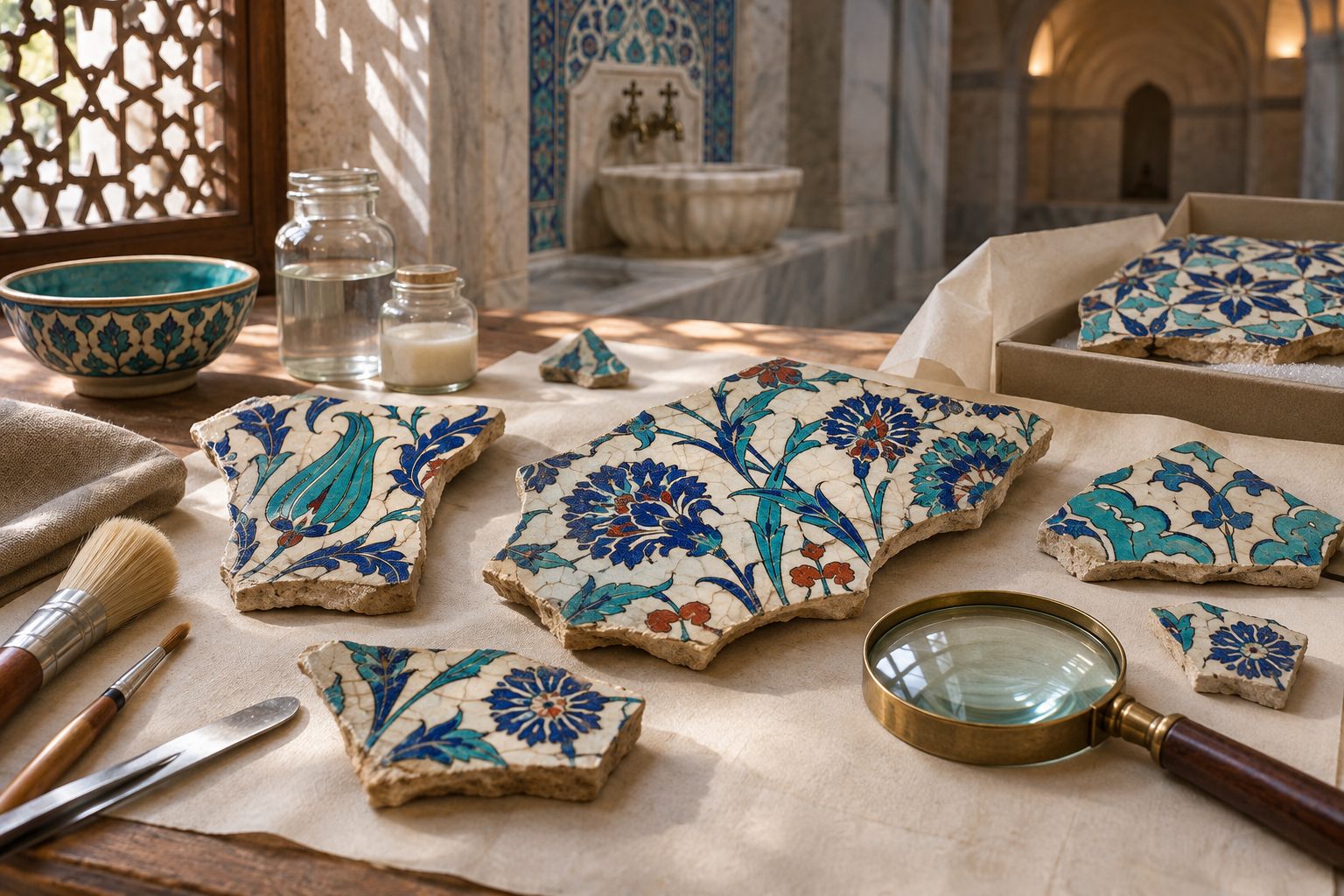
They can help explain its decoration and construction history. A surviving fragment is evidence; a complete modern display may also contain reconstruction.
Read the guide ↗Towels, tools and bathing objects
A washable peştemal or bath towel is practical. Check fabric, size and care instructions; a historical-looking pattern does not prove age or handmade production.
Read the guide ↗Museums and cultural heritage
It is a museum visit, not a treatment reservation. Check current visiting arrangements directly and book a working hamam separately if you want a bath.
Read the guide ↗Museums and cultural heritage
Towels, bowls, clogs and grooming tools show how people prepared, washed and dressed. Museum labels help distinguish everyday use from ceremonial or decorative objects.
Read the guide ↗Museums and cultural heritage
Do not assume it does. Check the operator's current ticket and treatment terms; museum access and bathing can be separate arrangements.
Read the guide ↗Museums and cultural heritage
They are archaeological traces with interpretation attached to them. Their presence does not justify inventing a complete story about who drew each ship or why.
Read the guide ↗Museums and cultural heritage
Work can reveal earlier layers concealed beneath or behind later structures. Archaeological findings need documented interpretation, rather than assumptions based on appearance.
Read the guide ↗Museums and cultural heritage
No. Recognition of Istanbul's historic areas is not a blanket endorsement of every bath, operator or treatment. Check the actual listed area and building context.
Read the guide ↗Museums and cultural heritage
Restoration works with an existing historic structure; recreation produces a new interpretation. Ask which elements survive and which were added during later work.
Read the guide ↗Museums and cultural heritage
Yes. Bath heritage exists in other Turkish cities too. Each site's period, surviving remains and visitor access should be checked individually.
Read the guide ↗Museums and cultural heritage
Do not choose a hamam on promises of detoxification, weight loss or disease treatment. Treat it as a bathing experience; personal health suitability requires individual medical advice.
Read the guide ↗Museums and cultural heritage
Look for the building's own documented history, museum records and restoration research. Separate construction dates from later alterations and the current operator's marketing.
Read the guide ↗